
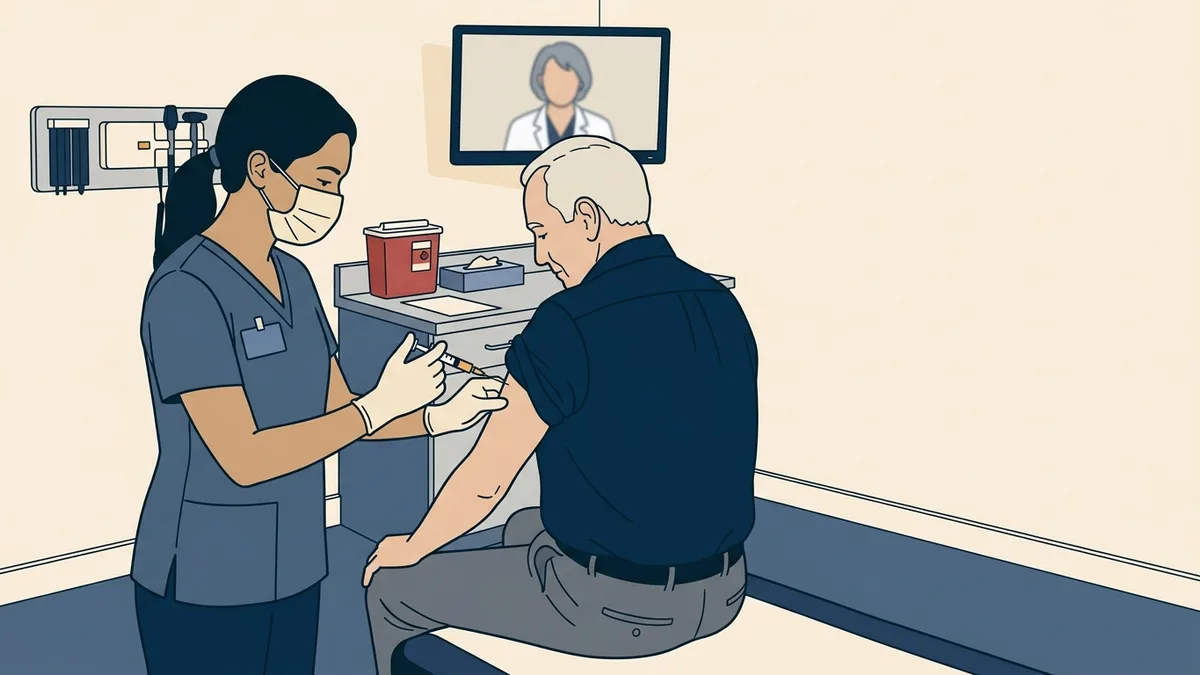
Yes. The CY 2026 Physician Fee Schedule final rule (90 FR 49266) permanently allows a supervising practitioner to meet Medicare's direct supervision standard through real-time audio and video, effective January 1, 2026, except for audio-only and for services with 010 or 090 global surgery indicators. State supervision rules still apply.
Yes. In the CY 2026 Physician Fee Schedule final rule (90 FR 49266, November 5, 2025), CMS finalized its proposal "to permanently adopt a definition of 'direct supervision' that allows 'immediate availability' of the supervising practitioner using audio/video real-time communications technology (excluding audio-only)." The rule took effect January 1, 2026. Unlike the Medicare telehealth flexibilities, which end after December 31, 2027 unless Congress extends them, this one is a CMS regulation with no end date.
What does the rule now say?
The definition at 42 CFR 410.32(b)(3)(ii) still says direct supervision in the office setting means the supervising practitioner "must be present in the office suite and immediately available." CMS added a sentence: the presence required "may include virtual presence through audio/video real-time communications technology (excluding audio-only) for services without a 010 or 090 global surgery indicator." The incident-to rules at 42 CFR 410.26 point to that definition, so the change carries over to services billed incident to a physician or NPP.
CMS made a parallel change for rural health clinics and federally qualified health centers, adding a definition of direct supervision at 42 CFR 405.2401(b) that allows the same audio-video presence.
What is excluded?
- Audio-only. A phone line does not satisfy the standard. The supervising practitioner must be reachable by real-time audio and video.
- Services with a 010 or 090 global surgery indicator. CMS kept this exclusion over commenters' objections, saying it is "necessary to ensure the ability of the supervising practitioner to intervene if complications arise" in complex or high-risk procedures.
Personal supervision, where the physician must be in the room, is unchanged.
Does this let one physician supervise several sites?
That is the operational appeal, and the rule does not set a numeric limit. "Immediately available" still has to be true. A supervising practitioner on video with one site, in a procedure at another, and driving between them is not immediately available to any of them. Write a coverage policy that names who is on supervision duty for each site and session, how staff reach them, and the backup when they do not answer within a set time.
Which practices gain the most?
Practices with several small sites and few physicians. A multi-site primary care group that kept a physician in each building only to supervise vaccinations, injections and nurse visits can now cover those sessions by video. Infusion and allergy practices gain too, though they should think hard about how quickly a supervisor on video can direct a response to an adverse reaction. Telehealth companies that run in-person lab draws or injection visits through partner sites also gain, provided the billing practitioner's supervision is real and documented, and state law allows the arrangement.
What about state law?
Medicare's definition decides whether Medicare pays. It does not override state scope-of-practice and supervision rules for medical assistants, nurses, PAs or NPs, or state rules on who may administer which drugs. Some states require on-site physician presence for particular services, such as certain injectables or aesthetic procedures. Check the state before you change staffing; our state telehealth law pages are a starting point, but supervision rules usually live in scope-of-practice regulations for each profession.
What else did the 2026 rule make lasting?
- Teaching physicians may have a virtual presence in all teaching settings when the service is a three-way telehealth visit, with teaching physician, resident and patient in different places. The CY 2027 proposal would widen this; see the 2027 fee schedule proposals.
- Frequency limits removed for subsequent inpatient visits, subsequent nursing facility visits and critical care consultations furnished by telehealth.
- A simpler telehealth list. CMS dropped the distinction between provisional and permanent services on the Medicare Telehealth Services List.
How do you document virtual supervision?
- Name the supervising practitioner on each incident-to service, as you would for in-person supervision.
- Record availability, not presence. A schedule showing who was on video supervision for that site and session is better evidence than a note in each chart.
- Keep the technology real-time and two-way. A messaging app or a phone line does not meet the standard.
- Exclude 010 and 090 services from virtual coverage in your scheduling system as well as in written policy.
- Train staff on escalation, including what happens if the video link drops.
Virtual supervision also matters for remote patient monitoring, where clinical staff work under general supervision, and where CMS has proposed for 2027 that the staff be the practice's direct employees; see the RPM direct-employee proposal. Our Telehealth Policies & Consent Kit ($1,950) includes a supervision coverage policy, and the Medicare telehealth hub tracks the rest of the 2026 and 2027 changes.
Common questions
- Is virtual direct supervision allowed in 2026?
- Yes. Since January 1, 2026, 42 CFR 410.32(b)(3)(ii) lets the supervising practitioner's presence include real-time audio and video, excluding audio-only, for services without a 010 or 090 global surgery indicator.
- Does virtual direct supervision apply to RHCs and FQHCs?
- Yes. CMS added a parallel definition of direct supervision for rural health clinics and federally qualified health centers at 42 CFR 405.2401(b) in the same CY 2026 rule.
- Can a supervising physician use a phone call?
- No. Medicare's definition excludes audio-only. The supervising practitioner must be immediately available through two-way, real-time audio and video communication.
- Does Medicare's rule override state supervision laws?
- No. It governs Medicare payment. State scope-of-practice and supervision rules for medical assistants, nurses, PAs and NPs still apply and may require on-site presence for some services.
Planning a Telehealth Service Line?
We research every state's rules for your service line, write the policies and consent forms, file telehealth registrations and keep it current, at published prices.