
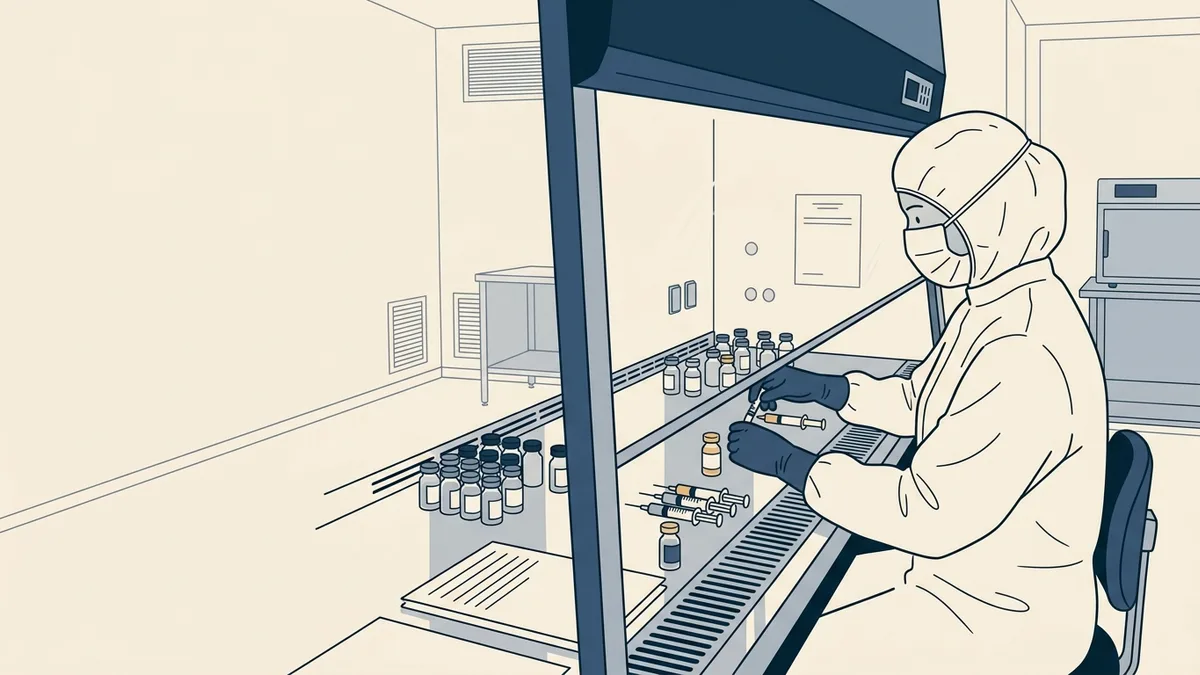
FDA declared the tirzepatide shortage resolved on December 19, 2024 and semaglutide on February 21, 2025, with grace periods ending in 2025. 503A pharmacies may no longer regularly compound essentially copies of commercially available drugs, except where the prescriber documents a change producing a significant difference for the individual patient.
The short answer: once FDA declared the tirzepatide shortage resolved (December 19, 2024) and the semaglutide shortage resolved (February 21, 2025), and the grace periods ran out in 2025, pharmacies lost the shortage-based room to compound copies of those drugs at scale. A 503A pharmacy may still compound for an identified patient when the prescriber determines that a change to the drug produces a significant difference for that patient, but it may not regularly compound drugs that are essentially copies of a commercially available product. Telehealth weight-loss programs that kept prescribing compounded GLP-1s need to be able to show, patient by patient, why.
This explains the federal framework for operators. Whether a specific product and prescription pattern is lawful is a question for your counsel and your pharmacy.
Why did compounding expand in the first place?
Federal law lets pharmacies compound copies of approved drugs more freely when a drug is on FDA's drug shortage list. During the shortages of tirzepatide and semaglutide, 503A pharmacies and 503B outsourcing facilities compounded large volumes, and many telehealth companies built weight-loss programs around those products.
Which dates matter?
- Tirzepatide: FDA determined the shortage resolved in October 2024, re-evaluated, and confirmed the decision on December 19, 2024, finding that supply met or exceeded current and projected demand. FDA said it did not intend to take action against 503A pharmacies for compounding that was essentially a copy until February 18, 2025, and against 503B outsourcing facilities until March 19, 2025, according to the summary by Frier Levitt.
- Semaglutide: FDA announced the shortage resolved on February 21, 2025, with enforcement discretion for 503A pharmacies until April 22, 2025 and for 503B outsourcing facilities until May 22, 2025.
What rule applies to 503A pharmacies now?
Section 503A of the Food, Drug, and Cosmetic Act (21 U.S.C. 353a) lets a licensed pharmacy compound for an identified individual patient based on a valid prescription, but only if it "does not compound regularly or in inordinate amounts... any drug products that are essentially copies of a commercially available drug product" (§ 353a(b)(1)(D)). A product is not "essentially a copy" if there is "a change, made for an identified individual patient, which produces for that patient a significant difference, as determined by the prescribing practitioner, between the compounded drug and the comparable commercially available drug product" (§ 353a(b)(2)).
Two things follow for a telehealth program:
- The significant-difference determination belongs to the prescriber, for the individual patient. A program-wide default formulation chosen by the company is hard to square with that language.
- The determination should be documented in the chart, with the clinical reason.
How are 503B outsourcing facilities affected?
Outsourcing facilities register with FDA under 21 U.S.C. 353b, follow current good manufacturing practice requirements, and are inspected by FDA. Their ability to compound from a bulk drug substance depends on the substance being on FDA's 503B bulks list or the drug being on the shortage list, and they may not compound drugs that are essentially copies of approved drugs. With the shortages resolved, most 503B compounding of these drugs ended after the grace periods.
What should a telehealth weight-loss program be able to show?
- Per patient: the clinical evaluation, why a compounded product rather than an approved product, and the prescriber's significant-difference determination where the compounded product would otherwise be essentially a copy.
- Per pharmacy: 503A or 503B status, state licenses in every state you ship to, recent inspection results, and any FDA or board actions. See choosing a pharmacy partner.
- Per product: what the formulation is and how it differs from the approved product, from the pharmacy, in writing.
- Per claim: marketing that describes the product accurately as compounded and not approved by FDA. FDA's warning letters in 2025 and 2026 cited the misbranding provisions. See marketing after FDA's warning letters.
Red flags in a compounding program
- The same "personalized" formulation for nearly every patient.
- The significant-difference reason supplied by the company or pharmacy rather than written by the prescriber.
- A pharmacy that cannot say whether it is operating under 503A or 503B.
- Marketing that sells the compounded product by reference to a brand.
- Pricing that is only possible at high compounding volume.
Where can a program built on compounding go from here?
Programs have moved in three directions: prescribing approved products, including through manufacturers' direct-to-consumer channels where available; narrowing compounding to patients with a documented clinical need for a different formulation; or adding services such as nutrition, behavioral support and lab monitoring around whatever the clinician prescribes. Each has different pharmacy, pricing and marketing consequences. See running a compliant telehealth weight-loss program.
Our Service-Line Pivot Package ($3,950) maps a weight-loss program's pharmacy, protocol and marketing changes for your counsel's review. See pricing.
Common questions
- Can pharmacies still compound semaglutide?
- Only within narrower limits. Since the shortage ended, a 503A pharmacy may not regularly compound drugs that are essentially copies of a commercially available product, unless the prescriber determines a change makes a significant difference for the individual patient. Counsel and the pharmacy should review any ongoing program.
- When did the semaglutide and tirzepatide shortages end?
- FDA confirmed the tirzepatide shortage resolved on December 19, 2024 and announced the semaglutide shortage resolved on February 21, 2025. Enforcement grace periods for 503A pharmacies ended February 18 and April 22, 2025, and for 503B facilities March 19 and May 22, 2025.
- What does 'essentially a copy' mean for compounded drugs?
- Under 21 U.S.C. 353a(b)(2), a compounded product is not essentially a copy if a change made for an identified individual patient produces a significant difference for that patient, as determined by the prescribing practitioner. The determination is individual, not program-wide.
Planning a Telehealth Service Line?
We research every state's rules for your service line, write the policies and consent forms, file telehealth registrations and keep it current, at published prices.